
As an Amazon Associate, we earn from qualifying purchases. This does not affect the price you pay.
Synthetic underwear, including polyester and nylon, is designed for durability, stretch, and moisture control. These fabrics are engineered fibers, meaning their structure is created for performance rather than natural breathability. Synthetic underwear handles machine washing well, but incorrect settings can trap odors, weaken elasticity, or cause fabric wear over time.
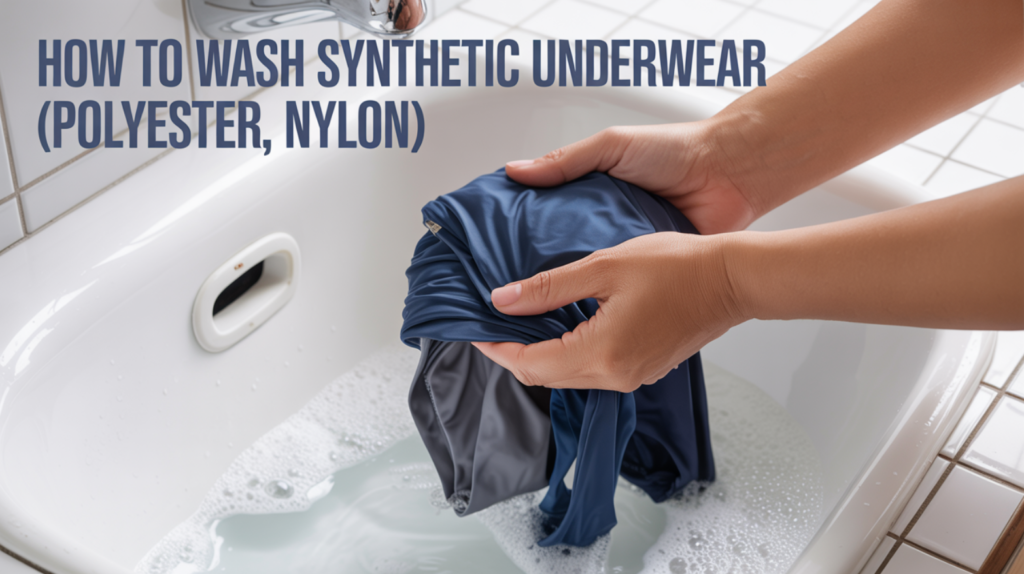
This article explains how polyester and nylon behave in washing machines, which settings keep them fresh and flexible, and how to avoid common mistakes that reduce comfort and lifespan.
How Synthetic Fabrics React in a Washing Machine
Polyester and nylon fibers are smooth, lightweight, and resistant to water absorption. This structure allows them to dry quickly and maintain shape, even after repeated washing. Because these fibers repel moisture rather than absorb it, sweat and body oils tend to cling to the surface instead of soaking in.
As a result, synthetic underwear relies more on proper detergent action than agitation. Unlike cotton, which releases dirt easily through absorption, synthetics need gentle but thorough rinsing to prevent residue buildup. This difference becomes clear when comparing washing behavior with natural fibers, as explained in How to Wash Cotton Underwear in a Washing Machine.
Best Washing Machine Settings for Synthetic Underwear
Synthetic underwear performs best when washed under controlled conditions.
Using cold or cool water helps preserve elasticity and prevents heat damage to synthetic fibers. A gentle or normal cycle provides sufficient movement without stressing seams or waistbands. Mild or sport-specific detergents are ideal because they break down oils without leaving residue.
Turning underwear inside out improves cleaning efficiency by allowing detergent to reach sweat-prone areas directly. This simple step also reduces surface friction during the wash cycle.
Managing Odors and Residue in Synthetic Fabrics
One of the most common complaints about synthetic underwear is odor retention. Because polyester and nylon repel water, detergent residue and body oils can accumulate over time.
Avoid using fabric softeners, as they coat fibers and trap odors rather than remove them. Occasional rinses with extra water help flush out buildup and restore freshness. Compared to silk or lace, synthetics tolerate frequent washing better, but they still benefit from thoughtful care. For more delicate fabric behavior, see Washing Silk Underwear in a Machine.
Drying Synthetic Underwear After Washing
Synthetic fabrics dry faster than most materials, but heat control remains important.
Air-drying preserves elasticity and reduces wear, especially for underwear with stretch components. If a dryer is used, a low-heat setting prevents fiber warping and shrinkage. High heat can cause synthetic fibers to stiffen or lose their recovery ability over time.
This drying resilience is one reason synthetics outperform wool in machine environments, where heat and agitation cause more dramatic reactions, as discussed in Does Wool Underwear Shrink in Washing Machines.
Common Washing Mistakes With Synthetic Underwear
Many synthetic garments fail prematurely due to small but repeated errors.
Using hot water damages elasticity. Overloading the washing machine increases friction and stretches seams. Excess detergent leaves residue that reduces breathability and comfort.
Correcting these habits allows synthetic underwear to remain flexible, odor-free, and supportive for long-term wear.
Conclusion
Synthetic underwear is well-suited for machine washing when its engineered nature is respected. Polyester and nylon respond best to cool water, gentle cycles, residue-free detergents, and low-heat drying. When washed correctly, these fabrics stay lightweight, elastic, and comfortable through frequent use.
Understanding how synthetic fibers interact with washing machines ensures your everyday essentials remain reliable, fresh, and ready for daily movement.