
As an Amazon Associate, we earn from qualifying purchases. This does not affect the price you pay.
Hot water is helpful for underwear hygiene, but it is not always strictly necessary. Cleanliness depends on how water temperature works together with detergent, wash time, and fabric type rather than heat alone.
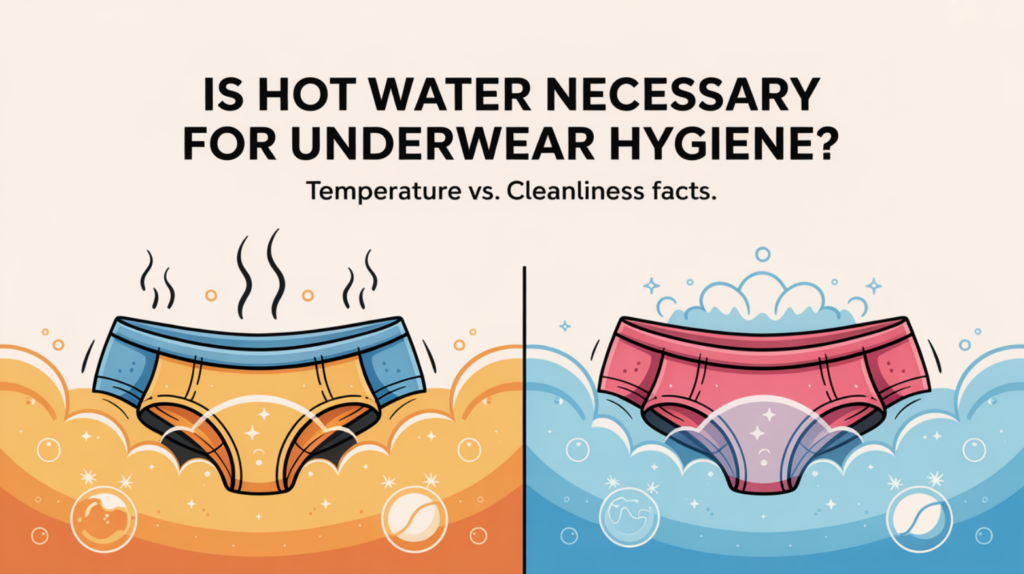
Why Temperature Matters for Underwear
Underwear absorbs sweat, skin oils, and bacteria throughout the day. Warm and hot water help loosen these residues by softening oils and weakening bacterial structures. As this happens, detergent can penetrate fibers more effectively, allowing microbes to detach and rinse away.
This is why higher temperatures are often associated with a “deeper clean,” especially for cotton underwear that can tolerate heat without damage.
When Hot Water Is Most Useful
Hot water becomes more important in specific situations. After heavy sweating, prolonged wear, or contact with bodily fluids, higher temperatures reduce bacterial survival more reliably. These conditions increase microbial load, and heat adds an extra safety margin.
Similarly, during recovery periods, hygiene concerns shift from routine freshness to health protection. In these cases, following best practices for washing underwear after infection or illness can reduce the risk of lingering germs.
Can Cold or Warm Water Still Be Hygienic?
Cold and warm water can still clean underwear effectively when detergent and wash cycles are used properly. Modern detergents are designed to work at lower temperatures, breaking down oils and lifting bacteria even without intense heat.
Mechanical action also plays a role. The movement of fabric against water removes microbes physically, which explains why machine washing underwear kills bacteria in most everyday situations, even on moderate settings.
Balancing Hygiene and Fabric Care
While hot water improves sanitation, frequent high-heat washing can shorten fabric lifespan. Elastic fibers weaken faster, and colors fade more quickly. For delicate or elastic-heavy underwear, warm water often provides a better balance between cleanliness and durability.
Choosing temperature based on context, rather than habit, protects both hygiene and garment comfort.
What About Germ Transfer Between Loads?
Some people worry that lower temperatures might allow bacteria to move between garments. In reality, detergent and rinsing remove most microbes, but machine cleanliness still matters. Periodic drum cleaning supports hygiene across all wash temperatures and addresses concerns about washing machines spreading germs to underwear.
Conclusion
Hot water is beneficial for underwear hygiene, but it is not mandatory for every wash. Detergent quality, cycle length, and fabric choice play equally important roles. By adjusting temperature to suit both hygiene needs and fabric care, washing becomes a thoughtful routine that keeps underwear clean, comfortable, and reliable day after day.