
As an Amazon Associate, we earn from qualifying purchases. This does not affect the price you pay.
Washing underwear after an infection or illness requires extra care to reduce lingering germs and prevent reinfection. Because underwear sits closest to sensitive areas of the body, it can retain bacteria, viruses, and fungi longer than outer clothing if not cleaned properly.
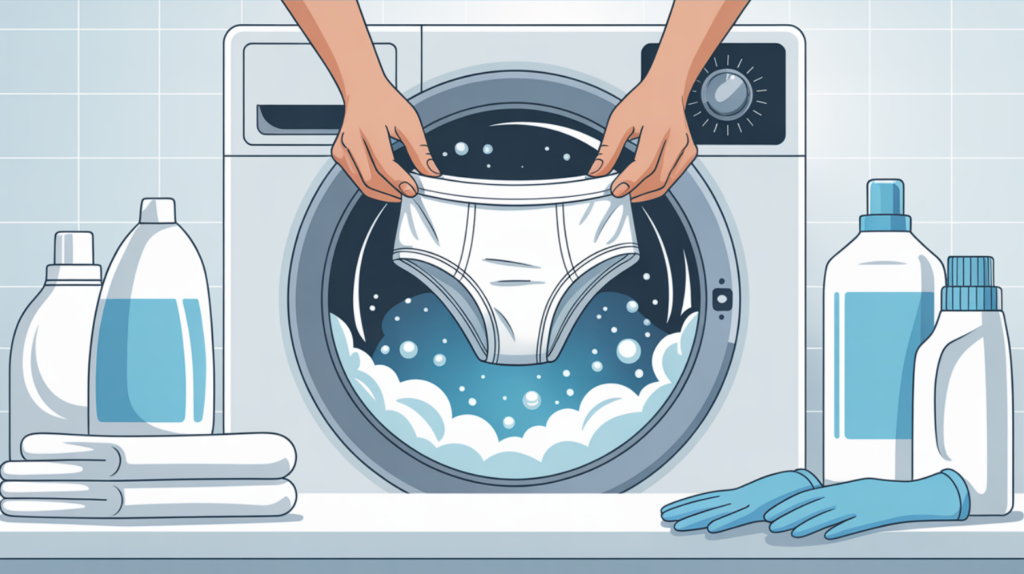
Why Illness Changes Laundry Hygiene Needs
During illness, the body releases more microbes through sweat, discharge, and skin contact. These organisms can cling to fabric fibers, especially in absorbent materials like cotton. As a result, routine washing habits that are fine for everyday wear may not feel sufficient during recovery.
This is where understanding how machine washing underwear kills bacteria becomes important, since effectiveness depends on how the wash is handled.
Choosing the Right Water Temperature
Warm to hot water provides an added layer of protection after illness. Higher temperatures weaken microbial structures, making them easier to remove during the wash. While not all fabrics tolerate heat, underwear worn during infection benefits from warmer settings when fabric care labels allow.
If you are unsure how much heat is truly necessary, hot water necessity for underwear hygiene explains when heat matters most and when detergent alone may be enough.
Detergent, Cycle Length, and Load Size
Detergent becomes especially important during illness-related washing. Its cleaning agents break down organic residue that microbes depend on, allowing them to rinse away instead of remaining embedded in fibers. Longer wash cycles improve this effect by giving detergent more time to work.
Avoid overloading the machine during these washes. Extra space allows water and detergent to circulate fully, increasing microbial removal and restoring a sense of true cleanliness.
Drying Matters More Than You Think
Drying completes the hygiene process. Heat from tumble drying further reduces moisture that bacteria and fungi need to survive. Fully drying underwear also prevents odor-causing microbes from reestablishing themselves once the wash ends.
For those concerned about lingering smells, pairing proper washing with guidance on preventing odor buildup in underwear helps restore freshness faster after illness.
Preventing Cross-Contamination
During recovery, it’s wise to wash underwear separately from towels or outer garments. This minimizes the chance of microbes transferring to other fabrics. Regular machine maintenance also supports hygiene, especially when considering whether washing machines can spread germs to underwear if left uncleaned.
These small precautions reduce anxiety and support a smoother return to normal routines.
Conclusion
Washing underwear after infection or illness calls for slightly higher standards, not extreme measures. Using appropriate water temperature, sufficient detergent, longer cycles, and thorough drying significantly reduces lingering germs. Once recovery is complete, these careful habits offer reassurance, comfort, and a clean reset, helping the body move forward without carrying traces of the past.