As an Amazon Associate, we earn from qualifying purchases. This does not affect the price you pay.
Overloading a washing machine may seem like a time-saving habit, but for underwear, it often causes hidden mechanical damage. When too many garments are packed into one wash, delicate fabrics and elastic are exposed to excess friction, uneven pressure, and restricted movement. Understanding how overloading affects underwear helps prevent early wear and loss of comfort.
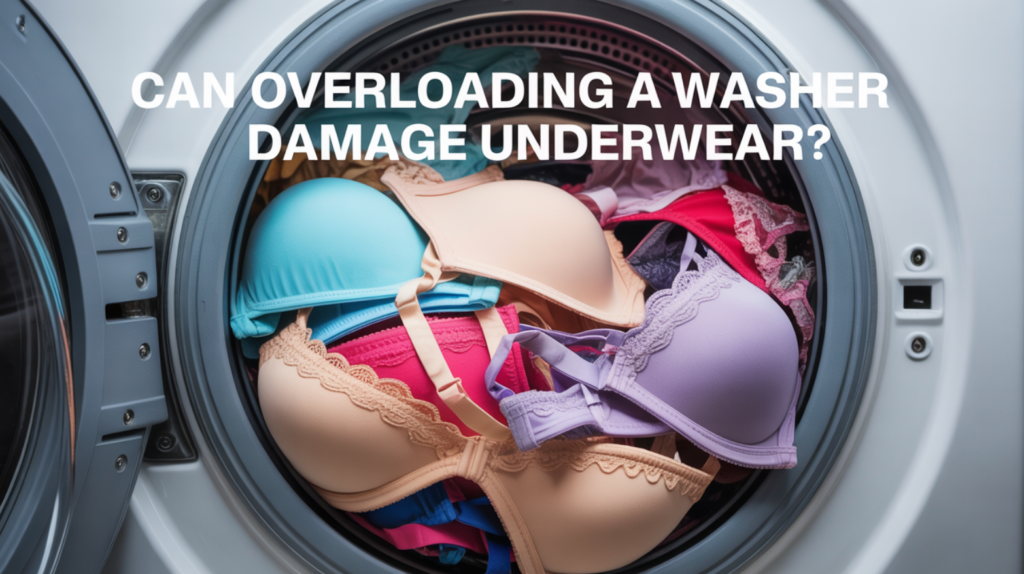
What Happens Inside an Overloaded Washer
A washing machine cleans by allowing clothes to move freely through water and detergent. When the drum is overloaded, this movement becomes restricted. Underwear gets pressed tightly between heavier garments, reducing its ability to flex naturally during agitation.
As a result, fabric experiences compression rather than gentle circulation. This repeated pressure stresses seams and elastic zones, which are the most vulnerable parts of underwear construction.
Increased Friction and Fabric Stress
In crowded loads, underwear rubs continuously against thicker fabrics like denim or towels. This contact increases surface friction, especially along waistbands and leg openings.
Over time, friction thins fabric fibers and weakens elastic recovery. The underwear may still look intact, but it begins to lose softness and stretch consistency. These effects often appear sooner than expected when overloading becomes routine.
Uneven Spinning and Elastic Strain
Overloading disrupts balance during the spin cycle. When garments cannot distribute evenly, some items absorb more centrifugal force than others. Lightweight underwear often gets pulled outward aggressively as heavier items anchor the load.
This uneven force stretches elastic beyond its intended range. The impact of spinning force on elastic behavior is explained further in Spin Cycle Effects on Underwear Elastic.
Reduced Cleaning Efficiency
An overloaded washer does not allow water and detergent to circulate properly. As a result, underwear may not rinse thoroughly, leaving behind detergent residue.
Residue stiffens fabric and reduces elasticity over time. This makes underwear feel tighter or rougher against the skin, even when the size has not changed. These effects are often mistaken for fabric aging rather than wash-related damage.
Overloading and Wash Settings Interaction
Even gentle wash settings lose effectiveness when the drum is overcrowded. Reduced movement negates the protective benefits of low agitation cycles.
This means that correct settings alone are not enough if load size is ignored. For optimal protection, proper load size must work together with correct cycle selection, as outlined in Best Washing Machine Settings for Underwear.
Early Signs of Overload Damage
Underwear damaged by overloading often shows subtle symptoms first. Elastic may stretch unevenly, seams may feel stiff, or fabric may lose breathability after washing.
Recognizing these early signs allows you to adjust load size before permanent damage occurs.
How Full Is Too Full?
A washer should be filled loosely, allowing a hand’s width of space at the top of the drum. This space ensures water flow and garment movement.
When underwear can move independently rather than being pressed flat, stress on fabric and elastic remains within safe limits.
Conclusion
Yes, overloading a washer can damage underwear by increasing friction, restricting movement, and overstressing elastic during spinning. Even with gentle settings, overcrowded loads undermine fabric protection. By keeping loads balanced and allowing proper drum space, underwear stays supportive, flexible, and comfortable through many more wash cycles.