As an Amazon Associate, we earn from qualifying purchases. This does not affect the price you pay.
Washing machines can spread germs to underwear under certain conditions, but this is uncommon when machines are used and maintained properly. Most of the time, the washing process removes bacteria rather than redistributing them, especially when detergent and adequate water flow are involved.
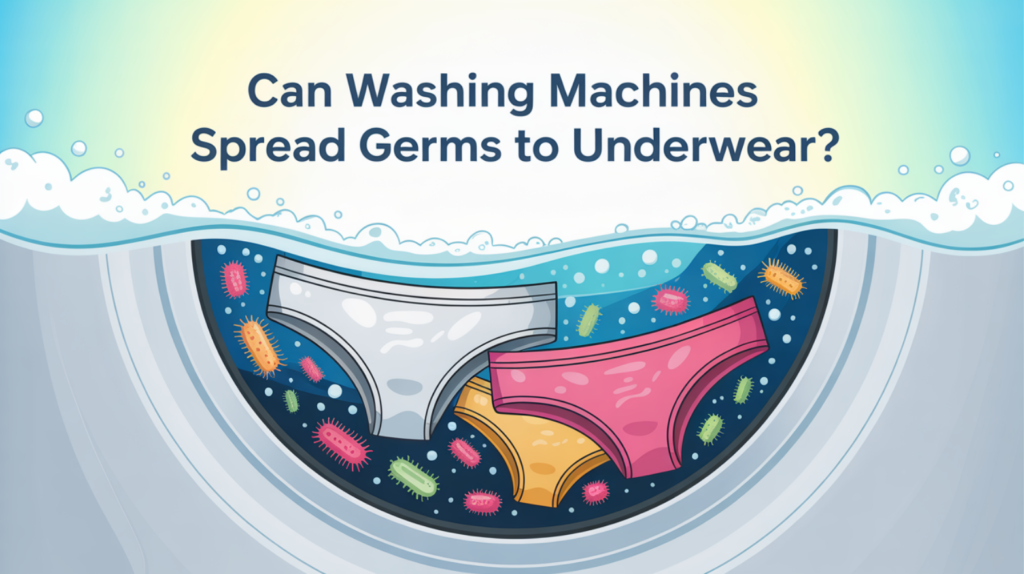
How Germs Could Transfer During Washing
Germs spread when moisture, residue, and microbes remain inside the machine between cycles. Damp environments allow bacteria to survive on the drum, rubber seals, or detergent drawer. When a new load begins, these microbes can mix with wash water and come into contact with fabrics.
This possibility explains why some people worry about hygiene, particularly when laundering underwear, which has closer contact with sensitive skin areas.
Why Detergent Usually Prevents Germ Spread
Detergent plays a protective role. Its cleaning agents break down oils and organic matter that bacteria need to cling to surfaces. As detergent circulates, microbes detach from both fabrics and the machine interior, reducing their ability to transfer between garments.
Because of this action, machine washing underwear kills bacteria in most everyday situations, even when multiple clothing types are washed together.
The Role of Water Temperature and Rinsing
Water temperature supports detergent effectiveness. Warm or hot water weakens microbial structures and helps flush bacteria out of the machine during rinsing. Cold water can still clean effectively, but thorough rinsing becomes more important to remove loosened microbes completely.
Understanding whether hot water is necessary for underwear hygiene helps reduce concern about germ transfer without overusing heat.
When the Risk Is Higher
The risk of spreading germs increases if the machine itself is neglected. Residue buildup, mold around seals, or consistently cold, short cycles allow bacteria to persist longer. Overloading the washer also reduces water circulation, which limits effective rinsing.
After illness, these factors matter more. Extra care during laundry helps reduce the chance of lingering microbes returning to clean garments, which connects closely with washing underwear after infection or illness best practices.
Simple Habits That Reduce Germ Spread
Leaving the washer door open between loads allows moisture to evaporate, making the environment less friendly to bacteria. Periodic empty hot-water cycles help remove residue from internal surfaces. Using the correct amount of detergent also prevents buildup that can trap microbes.
These small steps keep the machine working as a cleaning tool rather than a contamination source.
Conclusion
Washing machines can spread germs to underwear only when conditions allow bacteria to survive inside the machine. With proper detergent use, suitable water temperature, full rinsing, and occasional maintenance, this risk stays very low. When cared for thoughtfully, the washing machine becomes a reliable barrier between everyday microbes and clean, comfortable underwear.