As an Amazon Associate, we earn from qualifying purchases. This does not affect the price you pay.
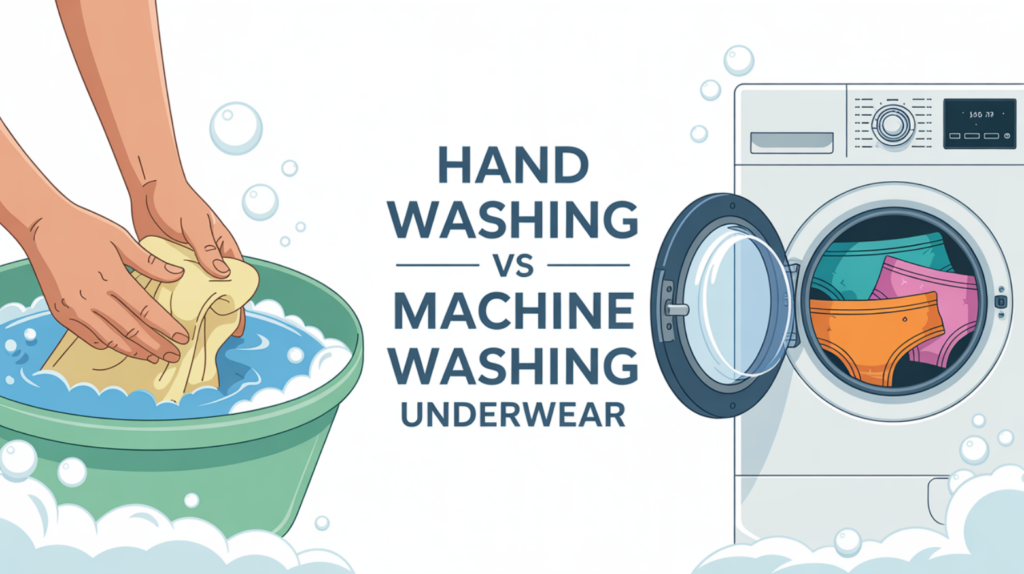
Both hand washing and machine washing are effective ways to clean underwear, but they work in different ways. In everyday households, an underwear washing machine usually refers to a regular washing machine used with care, while hand washing relies on manual control to protect delicate fabrics. Understanding how these two methods differ helps clarify when each approach makes the most sense.
How Hand Washing Underwear Works
Hand washing cleans underwear through direct contact, gentle movement, and controlled water exposure. This method allows fabrics to be handled carefully, reducing stress on elastic bands and fine stitching. Because pressure is applied lightly, hand washing is often associated with fabric preservation.
This approach is especially appealing for people concerned about wear and tear. It also explains why some compare hand washing with machine use when asking whether underwear can be safely washed in a washing machine without causing damage.
How Machine Washing Underwear Works
Machine washing relies on drum motion, detergent action, and water circulation to remove sweat, oils, and residue. While the process is automated, modern machines offer gentle cycles designed for delicate garments, making them suitable for underwear when used properly.
Unlike hand washing, machine washing provides consistency. Each cycle applies the same conditions, which helps maintain hygiene across repeated washes. This consistency is why machine washing remains the preferred option for most households despite concerns about fabric care.
Fabric Care and Elastic Durability
Elastic waistbands and seams are often the deciding factor when choosing a washing method. Hand washing minimizes stretching because fabrics are not subjected to spin cycles. As a result, it is sometimes viewed as safer for long-term elasticity.
Machine washing, however, does not automatically damage elastic. Problems usually occur due to high spin speeds or improper load mixing. This distinction is important for those wondering whether machine washing actually ruins underwear elastic or if the issue lies in how the machine is used.
Hygiene Differences Between the Two Methods
From a hygiene perspective, machine washing generally provides more thorough rinsing and detergent distribution. This makes it effective at removing odor-causing residue when underwear is washed regularly. Hand washing can still be hygienic, but results depend heavily on technique, water temperature, and rinsing quality.
Frequency also matters. Regardless of the method chosen, following guidance on how often underwear needs washing plays a larger role in hygiene than the washing method itself.
Choosing the Right Method for Everyday Use
Hand washing is best suited for occasional care, such as very delicate fabrics or items with decorative details. Machine washing, on the other hand, offers convenience and consistency for daily routines, especially when settings are chosen thoughtfully.
Rather than viewing these methods as competing options, many people use both. Hand washing becomes a supplemental method, while machine washing remains the foundation of regular underwear care.
Conclusion
In practical terms, both hand washing and machine washing can clean underwear effectively when done correctly. An underwear washing machine does not replace careful handling, just as hand washing does not guarantee better hygiene by default. The most reliable approach combines proper machine use with occasional hand washing when fabrics require extra care, ensuring both cleanliness and longevity.