As an Amazon Associate, we earn from qualifying purchases. This does not affect the price you pay.
Choosing between hot or cold water for underwear washing directly affects cleanliness, fabric strength, and long-term comfort. Because underwear absorbs sweat, oils, and bacteria close to the skin, water temperature plays a critical role in how well it is cleaned, and how long it lasts.
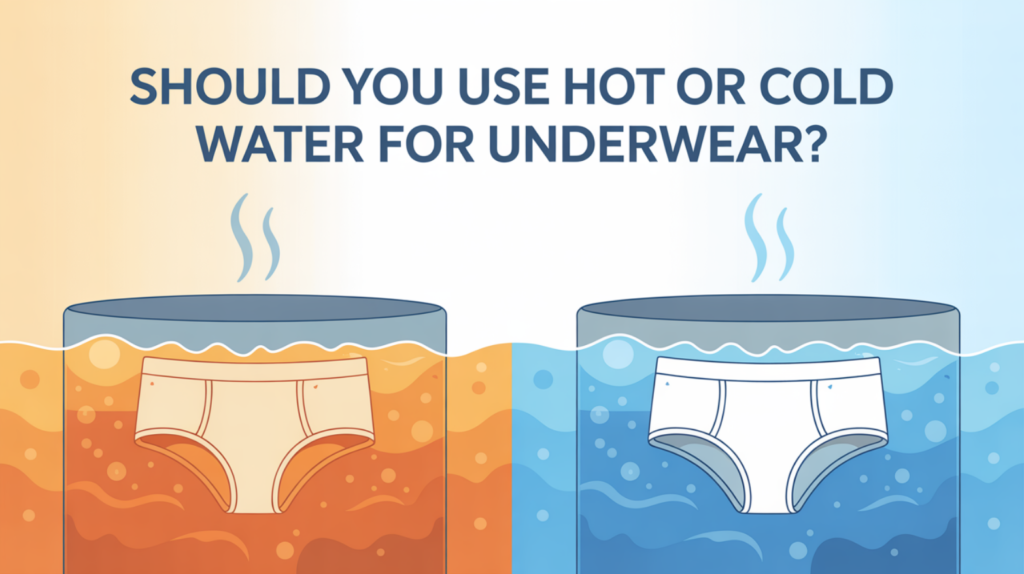
Understanding how temperature interacts with fabric and elastic helps you wash underwear safely without causing silent damage over time.
How Water Temperature Affects Underwear Fabrics
Water temperature controls how fibers expand during washing. When underwear enters warm or hot water, fibers loosen and open slightly, which allows detergent to penetrate more deeply. While this can improve soil removal, it also increases stress on elastic and stitching.
Cold water, on the other hand, keeps fibers more stable. Because the fabric structure remains tighter, elastic bands experience less stretching and recovery stress during the wash cycle. As a result, underwear washed in cooler temperatures tends to maintain its shape longer.
Cold Water: The Safest Everyday Choice
Cold water is generally the best option for regular underwear washing. It removes sweat, light oils, and everyday residue effectively when combined with proper detergent. More importantly, it protects elastic from heat fatigue, which is one of the most common causes of loosened waistbands.
This gentler approach works especially well when paired with the correct wash cycle. If settings are too aggressive, even cold water cannot fully prevent wear, which is why cycle selection matters alongside temperature, as explained in Right Washing Machine Settings for Underwear.
When Warm Water Can Be Useful
Warm water can be appropriate in specific situations, such as illness recovery or heavy soil buildup. The moderate heat improves oil breakdown without reaching temperatures that aggressively weaken elastic fibers.
However, repeated warm washes gradually reduce fabric elasticity. Over time, underwear may look intact while feeling looser and less supportive. This slow degradation is often mistaken for normal aging, even though temperature is a major contributor.
Why Hot Water Causes Long-Term Damage
Hot water causes fibers and elastic threads to expand rapidly. As they cool during rinsing and spinning, they contract unevenly. This repeated expansion-and-contraction cycle slowly breaks down elastic recovery.
In addition to heat stress, hot water often encourages people to use stronger wash programs. Combined with forceful spinning, this accelerates damage. The mechanical impact of spinning is discussed further in Spin Cycle Effects on the Underwear Elastic.
Hygiene Concerns and Temperature Myths
A common belief is that underwear must be washed in hot water to be hygienic. In reality, modern detergents are formulated to clean effectively in cold water. Bacteria removal depends more on detergent action and rinse quality than extreme heat.
Using excessively hot water for perceived hygiene often does more harm than good. Proper detergent use, adequate rinsing, and consistent washing frequency provide cleanliness without sacrificing fabric health.
Temperature and Load Size Interaction
Water temperature becomes even more important when washers are overloaded. In crowded drums, hot water cannot circulate evenly, which reduces cleaning efficiency while still exposing fabric to heat stress.
This combination increases friction and stretching, especially when underwear becomes trapped between heavier garments. The relationship between load size and damage is explored in Can Overloading a Washer Damage Underwear.
Conclusion
Cold water is the safest and most effective choice for washing underwear in everyday situations, balancing hygiene with fabric preservation. Warm water may be used occasionally when extra cleaning power is needed, but hot water should be avoided for regular washing. By matching water temperature to fabric needs rather than habit, underwear stays supportive, comfortable, and wearable for much longer.