As an Amazon Associate, we earn from qualifying purchases. This does not affect the price you pay.
The spin cycle determines how forcefully water is removed from clothing, and for underwear, this force directly affects elastic strength, shape retention, and long-term comfort. While spinning is essential for drying efficiency, excessive spin speed quietly strains elastic fibers during every wash.
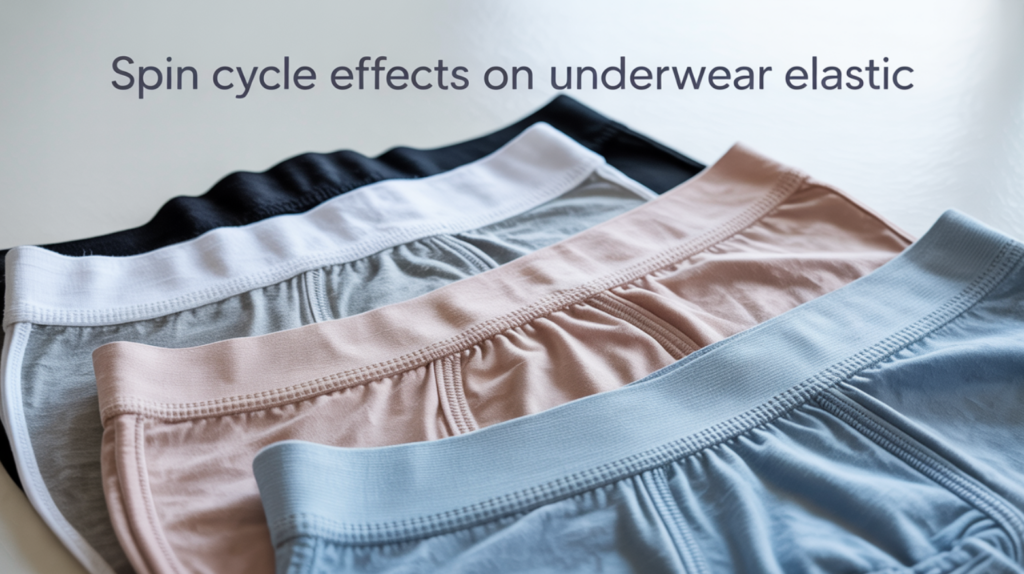
Understanding how spin cycles work helps prevent underwear from losing support sooner than expected.
How Spin Cycles Interact with Elastic Fibers
Elastic in underwear is designed to stretch and recover gently. During the spin cycle, centrifugal force pulls fabric outward against the drum. This repeated outward tension places stress on waistbands and leg openings, especially when the fabric is already softened by water.
As spin speed increases, elastic fibers experience stronger pull forces. Over time, these forces reduce elastic recovery, which leads to underwear that feels loose even when the fabric itself looks undamaged.
High Spin Speeds and Shape Loss
High-speed spin cycles remove water quickly, but they do so by stretching garments aggressively. Underwear, being lightweight, gets flung outward more intensely than heavier clothing. This makes elastic bands work harder than intended.
When this happens repeatedly, elastic begins to lose its snap. The waistband may roll, leg openings may gape, and overall fit becomes inconsistent. These changes often appear gradually, making the cause easy to overlook.
Low Spin Speeds: A Protective Alternative
Lower spin speeds reduce outward force while still extracting sufficient water. Although drying time may increase slightly, elastic fibers remain closer to their natural tension range. This balance helps underwear maintain its original shape across many wash cycles.
Low spin settings are especially effective when paired with gentle wash cycles. Together, they limit both agitation and stretching, which is why cycle selection matters as much as temperature. This connection is explained further in Best Settings for Underwear.
The Role of Load Size During Spinning
Spin-related damage increases when washers are overloaded. In crowded drums, underwear becomes pinned between heavier garments during spinning. This uneven pressure amplifies stretching in localized areas, particularly along seams and elastic edges.
Overloading also reduces the drum’s ability to distribute force evenly, which increases friction and fabric distortion. The mechanical risks of crowding are discussed in more detail in Can Overloading a Washer Damage Underwear.
Spin Speed and Water Temperature Together
Spin damage becomes more pronounced when combined with heat. Warm or hot water softens elastic, making it more vulnerable during high-speed spinning. Once softened, elastic stretches farther and recovers less effectively.
This is why temperature choice and spin settings should be considered together rather than separately. The relationship between heat and fabric stability is explored further in Should You Use Hot or Cold Water for Underwear.
Common Signs of Spin-Related Damage
Underwear affected by excessive spinning often shows subtle signs before visible wear appears. Elastic may feel thinner, stretch unevenly, or fail to return fully to shape after washing. These changes signal mechanical fatigue rather than fabric aging.
Recognizing these signs early allows adjustments before permanent damage occurs.
Conclusion
Spin cycles play a critical role in how long underwear elastic remains supportive and comfortable. High spin speeds increase stretching forces that slowly weaken elastic fibers, while lower speeds preserve shape and fit. By choosing gentler spin settings and avoiding overcrowded loads, underwear retains its structure, elasticity, and everyday comfort far longer.