As an Amazon Associate, we earn from qualifying purchases. This does not affect the price you pay.
Silk underwear is valued for its smooth texture, lightweight feel, and natural temperature-regulating properties. Silk fibers are protein-based, which gives them softness and sheen but also makes them sensitive to agitation, heat, and harsh detergents. Silk can be washed in a washing machine safely, but only when the process is carefully controlled.
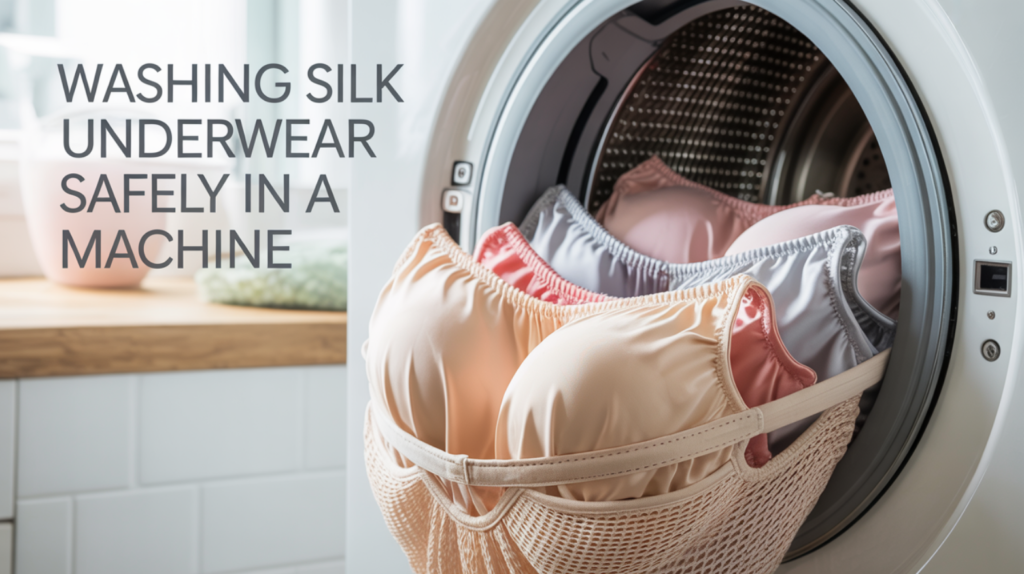
This guide explains how silk reacts inside a machine, which settings protect its structure, and how to avoid damage that permanently alters its feel and appearance.
How Silk Behaves in a Washing Machine
Silk fibers are long, smooth, and delicate, which allows them to glide against the skin comfortably. However, this same smoothness makes silk vulnerable to friction and fiber breakage during machine washing.
When exposed to aggressive agitation, silk fibers weaken and lose their natural luster. Unlike cotton, which becomes stronger when wet, silk becomes more fragile once saturated. This difference explains why silk requires gentler handling than everyday fabrics, as outlined when comparing it to sturdier materials like cotton in How to Wash Cotton Underwear in a Washing Machine.
Safe Machine-Washing Settings for Silk Underwear
Protecting silk begins with selecting the right washing machine settings.
A cold-water temperature preserves silk’s protein structure and prevents fiber stress. A delicate or hand-wash cycle limits movement, reducing friction and stretching. Using a silk-safe or mild detergent prevents chemical damage that can strip the fabric’s softness.
Placing silk underwear inside a mesh laundry bag adds another layer of protection, preventing contact with rougher garments. These steps work together to simulate the gentleness of hand washing while still using a machine.
Why Silk Should Be Washed Separately
Silk should never be washed with heavy or textured fabrics. Items like denim, towels, or garments with hooks can catch silk fibers and cause irreversible tearing.
Even lighter fabrics can create unnecessary friction if mixed carelessly. This separation becomes especially important when comparing silk to lace, which is also delicate but structured differently. While lace relies on open patterns that snag easily, silk relies on fiber integrity that weakens under stress, as discussed in Can You Machine Wash Lace Underwear.
Drying Silk Underwear After Machine Washing
Drying is one of the most critical stages for silk care. Heat causes silk fibers to lose elasticity and dull their natural sheen.
Air-drying is the safest method. Laying silk flat on a clean towel allows moisture to evaporate without stretching the fabric. Hanging silk can cause distortion due to water weight, while tumble dryers, even on low heat, risk shrinkage and fiber damage.
This sensitivity to heat places silk closer to wool in behavior, where temperature control determines whether the garment maintains its shape, as explained in Does Wool Underwear Shrink in Washing Machines?.
Common Mistakes That Ruin Silk Underwear
Many silk garments are damaged by habits that seem harmless.
Using standard detergent breaks down silk proteins over time. Wringing silk to remove water stretches fibers unevenly. Washing too frequently also accelerates wear, especially when unnecessary.
Avoiding these mistakes helps silk underwear remain smooth, lightweight, and comfortable for long-term use.
Conclusion
Silk underwear can be machine washed safely when its delicate nature is fully respected. Silk fibers respond best to cold water, minimal agitation, protective laundry bags, and air-drying. When cared for properly, silk maintains its softness, natural shine, and luxurious feel wash after wash.
Understanding how silk interacts with washing machines removes uncertainty and allows you to preserve both comfort and elegance without relying solely on hand washing.